Top News
Supreme Court of India: Key Rulings This Week (June 29 – July 8, 2026)
The Supreme Court has kept up a brisk pace over the past week, delivering rulings that touch election law, civil procedure, inheritance disputes, and — in one closely watched case — the judiciary’s stance on artificial intelligence. Here’s a roundup of the most significant judgments. Municipal Poll Candidates Can’t Be Prosecuted Under Election Law for…

The Legal and Constitutional Challenges of the Waqf (Amendment) Act, 2025 — Analysis of Minority Rights, Property Law, and Potential Supreme Court Scrutiny
Introduction Waqf—an enduring endowment of property for pious, religious or charitable purposes under Muslim law—has long occupied a delicate junction where religious autonomy, property rights, and public administration meet. India’s primary framework, the Waqf Act, 1995, created a system of state Waqf Boards, registration, and supervision over waqf properties. In 2025, Parliament enacted the Waqf…

Technology and Policing: Laws Governing Digital Forensics, Surveillance, Data Retention, and Privacy
Introduction Technology has revolutionized policing, enabling advanced surveillance, digital forensics, and predictive analytics. Yet, these tools raise deep concerns about civil liberties and constitutional safeguards. India’s legal regime—anchored in the Information Technology Act, 2000, and the Indian Telegraph Act, 1885—provides broad investigatory powers but weak privacy protections. With the Digital Personal Data Protection Act, 2023,…
Recognition of Same-Sex Marriage: Arguments, International Precedents, and Current Indian Jurisprudence
Introduction Across democracies, marriage equality has evolved from the margins of public debate to the center of constitutional law. In India, the Supreme Court’s 2018 ruling in Navtej Singh Johar decriminalized same-sex intimacy, paving the way for discussions on partnership and family recognition. The 2023 Constitution Bench decision in Supriyo @ Supriya Chakraborty v. Union…
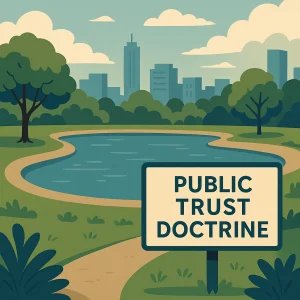
"Public Trust Doctrine" Applied to Artificial Lakes & Urban Water Bodies — Legal Implications of the Recent Supreme Court Extension
Introduction The doctrine of public trust has long undergirded environmental jurisprudence in India: the idea that certain natural resources—water, air, forests—are held by the State in trust for the public and cannot be alienated or misused inconsistently with public welfare. In a recent landmark ruling, the Supreme Court extended the doctrine to include artificial lakes…
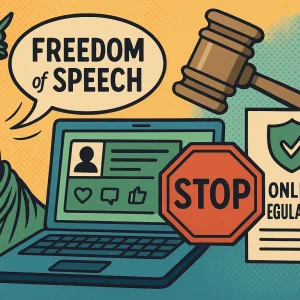
The Indian Approach to Hate Speech, Sedition, and Free Speech: Where the Line Lies
Introduction Free speech has always been both the hallmark and the test of a democracy. In India, the Constitution guarantees freedom of speech and expression under Article 19(1)(a)—a cornerstone of personal liberty and democratic participation. Yet this right is not absolute; it coexists with a set of reasonable restrictions under Article 19(2) designed to safeguard…
Supreme Court of India: Key Rulings This Week (June 29 – July 8, 2026)
The Supreme Court has kept up a brisk pace over the past week, delivering rulings that touch election law, civil procedure, inheritance disputes, and — in one closely watched case — the judiciary’s stance on artificial intelligence. Here’s a roundup of the most significant judgments. Municipal Poll Candidates Can’t Be Prosecuted Under Election Law for…
The Legal and Constitutional Challenges of the Waqf (Amendment) Act, 2025 — Analysis of Minority Rights, Property Law, and Potential Supreme Court Scrutiny
Introduction Waqf—an enduring endowment of property for pious, religious or charitable purposes under Muslim law—has long occupied a delicate junction where religious autonomy, property rights, and public administration meet. India’s primary framework, the Waqf Act, 1995, created a system of state Waqf Boards, registration, and supervision over waqf properties. In 2025, Parliament enacted the Waqf…
Technology and Policing: Laws Governing Digital Forensics, Surveillance, Data Retention, and Privacy
Introduction Technology has revolutionized policing, enabling advanced surveillance, digital forensics, and predictive analytics. Yet, these tools raise deep concerns about civil liberties and constitutional safeguards. India’s legal regime—anchored in the Information Technology Act, 2000, and the Indian Telegraph Act, 1885—provides broad investigatory powers but weak privacy protections. With the Digital Personal Data Protection Act, 2023,…
Recognition of Same-Sex Marriage: Arguments, International Precedents, and Current Indian Jurisprudence
Introduction Across democracies, marriage equality has evolved from the margins of public debate to the center of constitutional law. In India, the Supreme Court’s 2018 ruling in Navtej Singh Johar decriminalized same-sex intimacy, paving the way for discussions on partnership and family recognition. The 2023 Constitution Bench decision in Supriyo @ Supriya Chakraborty v. Union…
"Public Trust Doctrine" Applied to Artificial Lakes & Urban Water Bodies — Legal Implications of the Recent Supreme Court Extension
Introduction The doctrine of public trust has long undergirded environmental jurisprudence in India: the idea that certain natural resources—water, air, forests—are held by the State in trust for the public and cannot be alienated or misused inconsistently with public welfare. In a recent landmark ruling, the Supreme Court extended the doctrine to include artificial lakes…
The Indian Approach to Hate Speech, Sedition, and Free Speech: Where the Line Lies
Introduction Free speech has always been both the hallmark and the test of a democracy. In India, the Constitution guarantees freedom of speech and expression under Article 19(1)(a)—a cornerstone of personal liberty and democratic participation. Yet this right is not absolute; it coexists with a set of reasonable restrictions under Article 19(2) designed to safeguard…
Most Viewed Posts
View All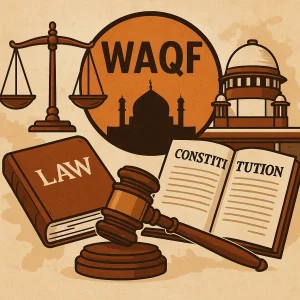


October 15, 2025
How to File a Public Interest Litigation (PIL) — Step by Step